

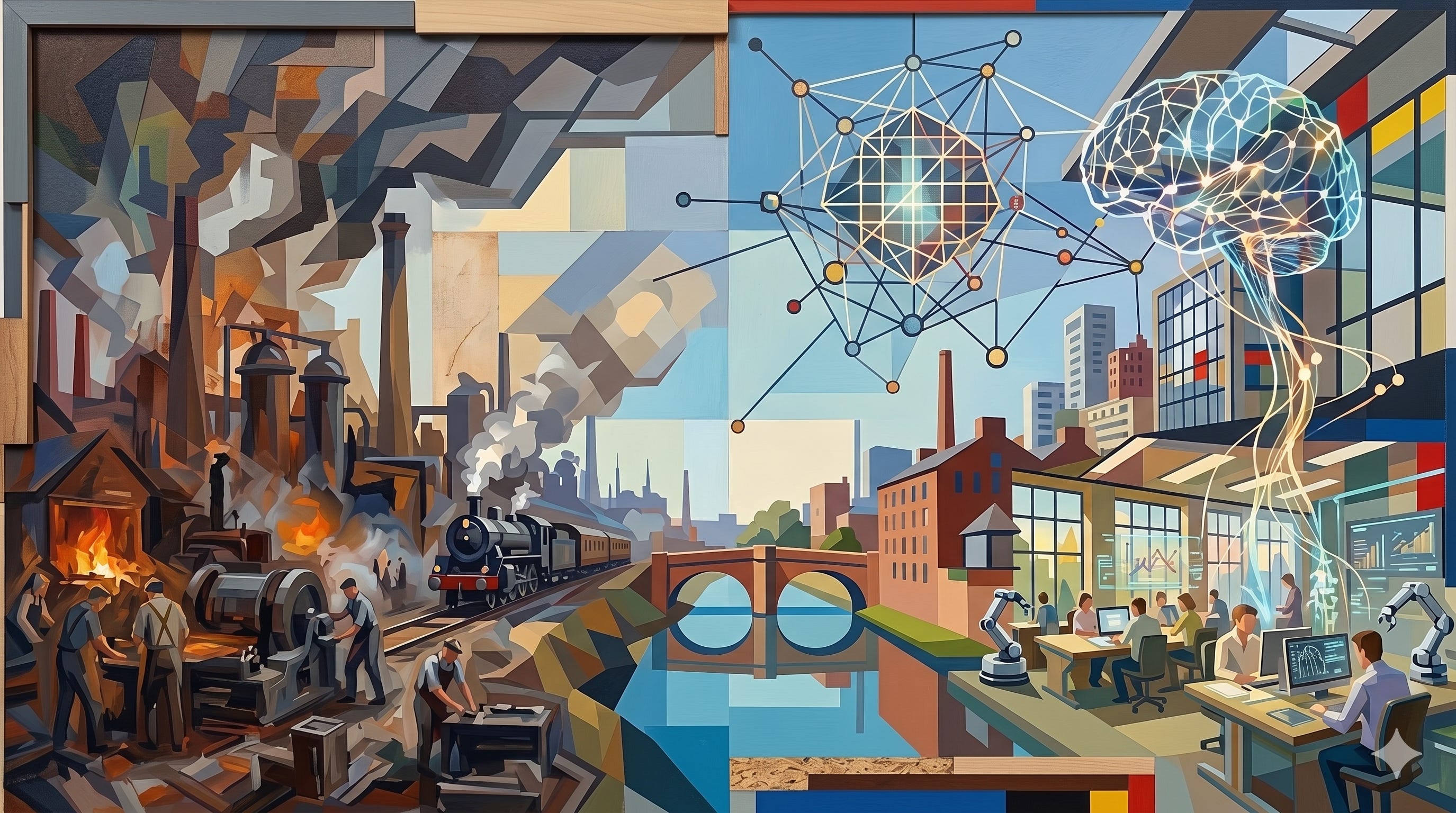
Adam Smith published The Theory of Moral Sentiments in 1759. The Wealth of Nations came seventeen years later. He never thought of them as separate arguments. We did that.
I have been thinking about this division as I read the layoff memos of 2026. In the first quarter alone, roughly 78,000 tech workers were let go, with close to half of those cuts traced directly to AI and workflow automation. The pattern is familiar by now, and most visible in instances like when Oracle let go of thousands within days of a stellar earnings report. Salesforce’s CEO summed up the logic last fall in five words: “I need less heads.” Meta and Microsoft each announced new reductions in recent days. The capital plan tells the rest of the story. The four largest hyperscalers are on track to spend close to $700 billion this year on AI infrastructure.
These are big numbers. They look like the wealth of nations in motion.
What is missing from most of the memos is the other book. Smith’s argument in Moral Sentiments was not primarily about feelings. It was about the architecture of judgment that lets a market work in the first place. Trust, reputation, the expectation that a counterparty will behave a certain way next month, the willingness to repurchase, the willingness to refer. These are not soft assets. They are the production function for everything Smith would later describe in The Wealth of Nations with the pin factory. A factory only generates wealth because there is a working system of trust around it that nobody on the assembly line is paid to maintain. Smith took that system for granted because it was everywhere around him. We are now running a real-time experiment on what happens when we no longer can.
For Customer Experience numbers tell that story in ServiceNow’s CX Shift study, which surveyed more than 34,000 people earlier this year, found that 51 percent of consumers cite a lack of empathy as their top frustration with service. In plainer terms, that is the absence of human judgment at the moment they need it. Only 20 percent of executives ranked it as a priority. Fifty-three percent of customers say they would switch providers after a single bad interaction. The wealth side is being measured in compute and quarterly margin. The worth side is being measured in churn that rarely shows up on the earnings call.
This is not a values issue, rather it is a model of where value actually comes from in a service economy. The wealth of nations, in Smith’s pin factory, was created by specialization and exchange. The worth of people, in Smith’s other book, was the operating substrate that made specialization and exchange durable enough to compound. Strip the worth of people and the factory still runs, in theory, but the customers will lose an ever critical connection.
I’m hopeful that we are not heading for a dystopia of clinical efficiency. I think the role of the customer will be elevated to differentiate, where the customer will do the sorting. They are the ones noticing which interactions feel like a transaction and which feel like a relationship, which moments resolve and which loop back, which companies treat them like a ticket number and which still recognize them on the second call. The 53 percent who say they would switch after one bad interaction are not expressing a preference. They are describing behavior already in progress.
What the customer is asking, in effect, is not whether AI should be in the loop. They have already accepted that. They are asking which moments in their journey still get a person, and what kind of judgment that person brings. They are answering it in real time, while companies are still deciding whether to ask. The ones running the wealth-side play without the worth-side foundation will hear the answer in their renewal numbers soon enough. Smith would not have called that a soft signal. He would have called it the whole point.