

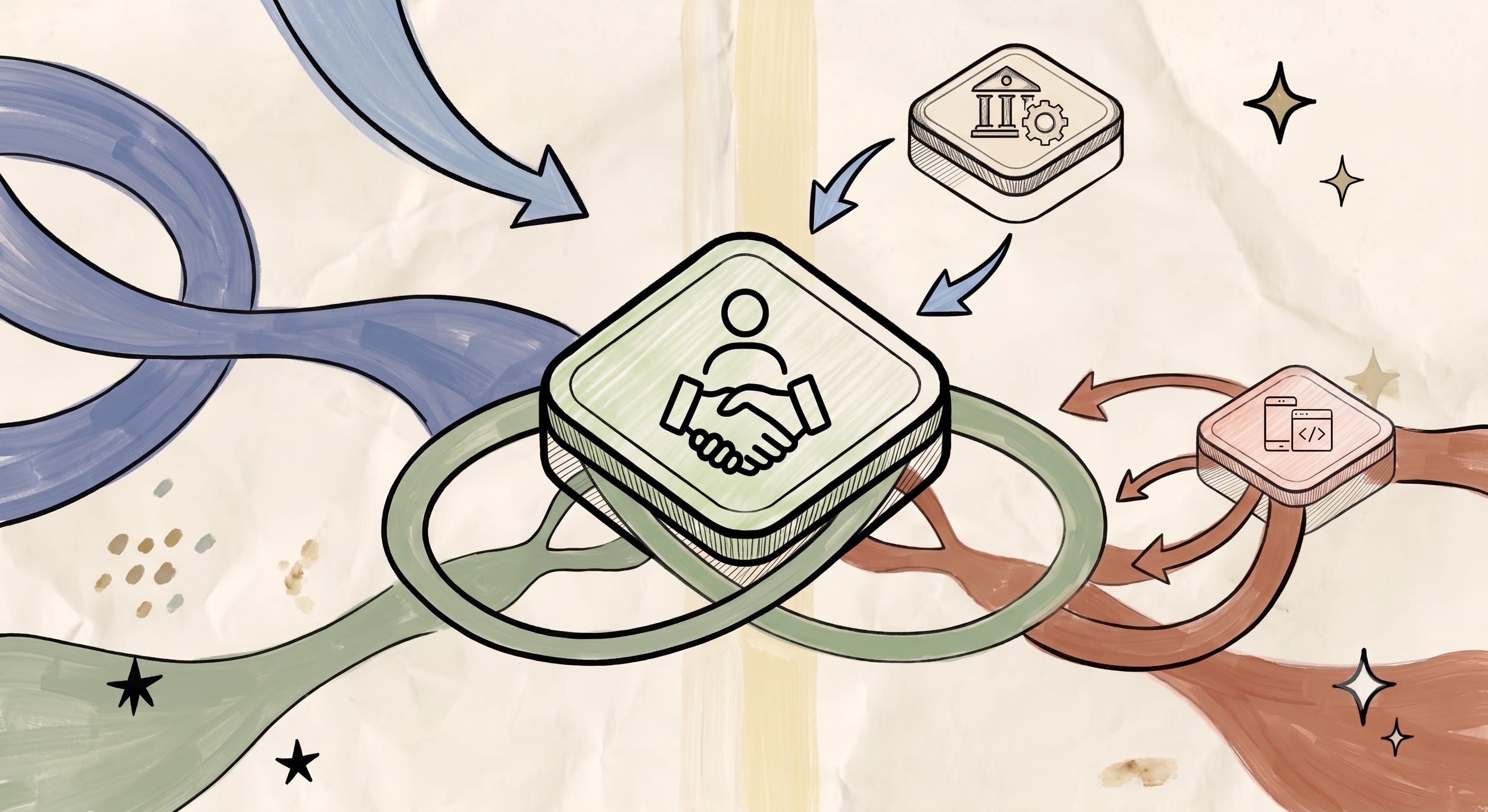
In the last piece, I argued that the enterprise context graph being built across the industry is only one-third of the infrastructure the agentic era will require. The customer and the product each bring knowledge and context of their own, and the value that emerges when all three contribute is qualitatively different from anything a single body can produce. The customer’s contribution is the one I want to focus on here, because it is the most important of the three and the one that is often overlooked given the history of surveillance being the default posture between enterprise and customer.
The reason the customer contribution matters most is straightforward. The customer is the only body in the relationship that experiences the full arc of it. The organization knows what it built and why. The product knows how it is being used. Only the customer knows what any of it actually means. What they were trying to accomplish, whether they succeeded, and what they wished the enterprise had asked them about before making the decisions it made. All of that is context, and it has never been available to the enterprise on terms either party could trust.
That is about to change. Customer-side agents, operating under a trust protocol like MyTerms, will make the customer’s own account of the relationship available to the enterprise as a first-class contribution to the context layer. MyTerms provides the missing piece the industry has been circling for years. A bilateral agreement, machine-readable and enforceable, that specifies what the customer is willing to share, what the enterprise is allowed to do with it, and what the customer expects in return. With that protocol in place, the customer’s agent will share context the enterprise has never had access to at any point in the history of customer experience.
What the enterprise will receive is not another data feed. It will be a structured account of the relationship from the customer’s own perspective. Why the product was purchased. What problem it was meant to solve. Whether that problem was solved. What has changed in the customer’s circumstances since. What competing options are being considered. What the enterprise could do to strengthen its standing over time. That is a completely different order of information from anything the enterprise’s own instruments have ever produced, because it is the customer’s own account rather than the enterprise’s interpretation of behavior. The customer will have latitude, through a MyTerms contract, in the depth and breadth of the information to share with both the enterprise and the product/service.
The context also compounds in ways the enterprise-side context cannot. The customer’s agent will remember every interaction with every vendor the customer engages with. It will compare experiences across the customer’s full commercial life and surface patterns the customer might never have articulated on their own. When it shares context with the enterprise, it is offering not just what the customer knows about this relationship, but what the agent has learned across many.
The implications will be significant and welcome. Product decisions will be shaped by the actual meaning customers are deriving from what they bought. Pricing will be shaped by value customers describe in their own terms. Service will be shaped by the customer’s own account of what would have made an interaction go better. Marketing will be shaped by claims the customer’s agent can verify against the customer’s own record of experience.
When customer-side agents begin participating as full peers under MyTerms, the enterprise will have access to a kind of understanding of its customers that thirty years of surveys and telemetry never came close to producing. The enterprises that build to receive it will operate with an intelligence the old era could not have generated, and the customers themselves will finally be in a position where their own account of the relationship is what shapes the decisions that affect them. That is a healthier commercial arrangement than either side has ever operated under, and it is coming into view faster than most of the current conversation is registering.